ARRAY SELECTION / APERTURE, GEOMETRY & FREQUENCY
Different arrays.
Different acoustic tasks.
Select the aperture and microphone layout for the frequency band, working distance and spatial detail your application needs.
Larger aperture / lower-frequency detailA larger aperture generally improves angular resolution at a given frequency, helping separate sources with longer wavelengths.
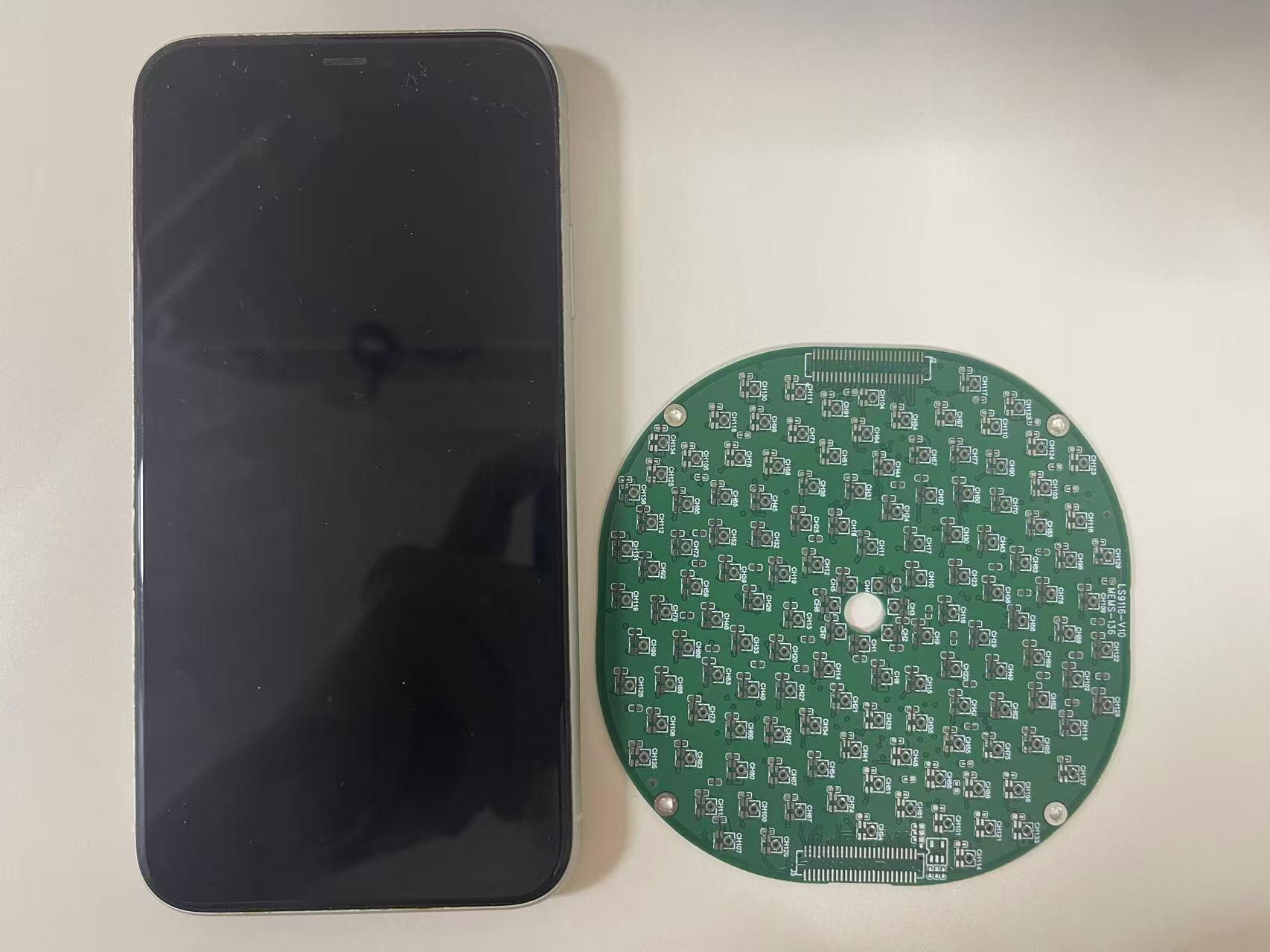
Dense layout / ultrasonic applicationsSmaller microphone spacing supports shorter wavelengths. Compact, dense arrays are useful for ultrasonic inspection, but size alone does not determine accuracy.
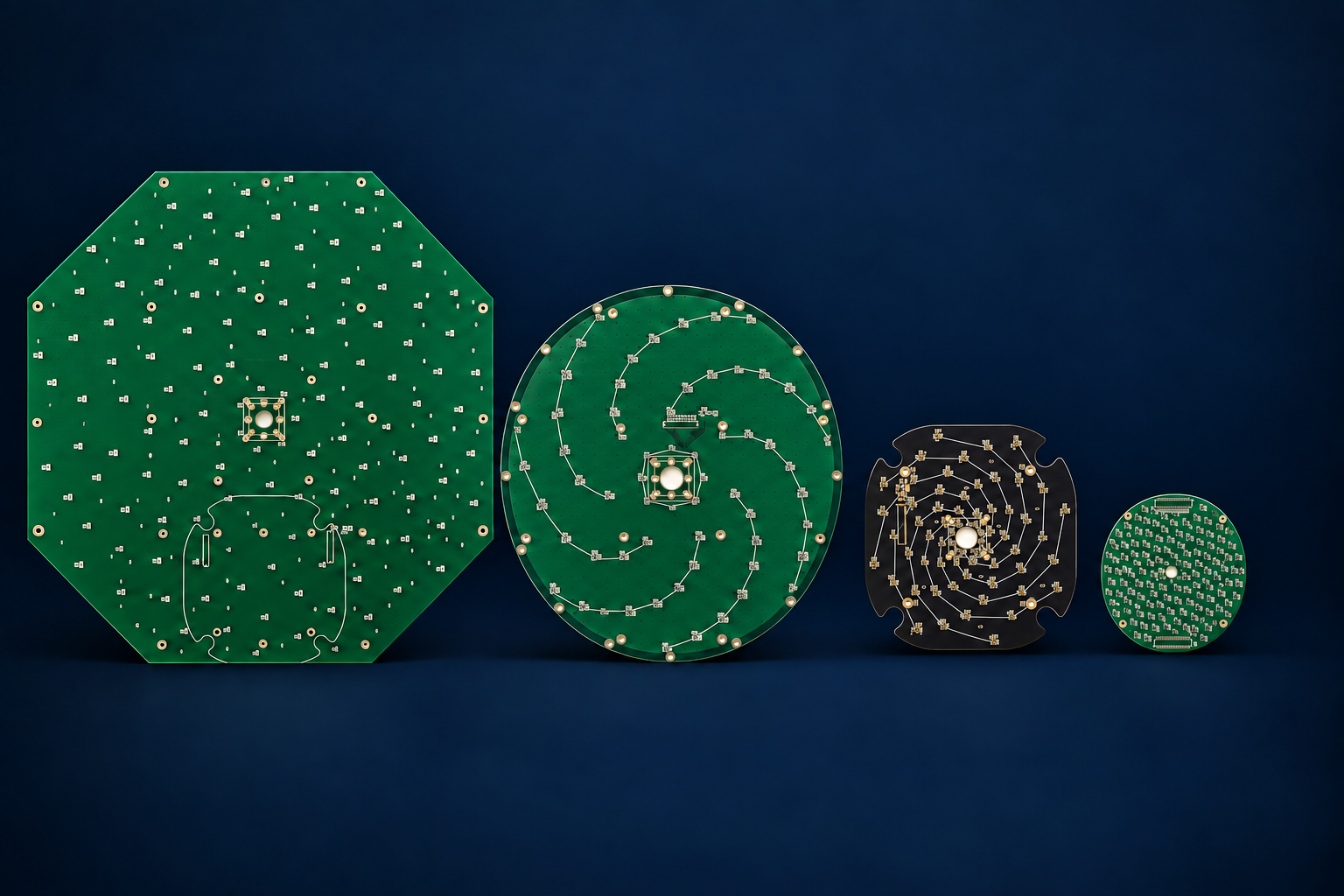
Distributed octagonal
Greater aperture for lower-frequency spatial resolution.
Wide-area layout
Circular geometry for application-specific localization.
Distributed layout
Compact integration for portable and embedded systems.
Dense layout
Closely spaced microphones for ultrasonic configurations.
View original hardware photographs
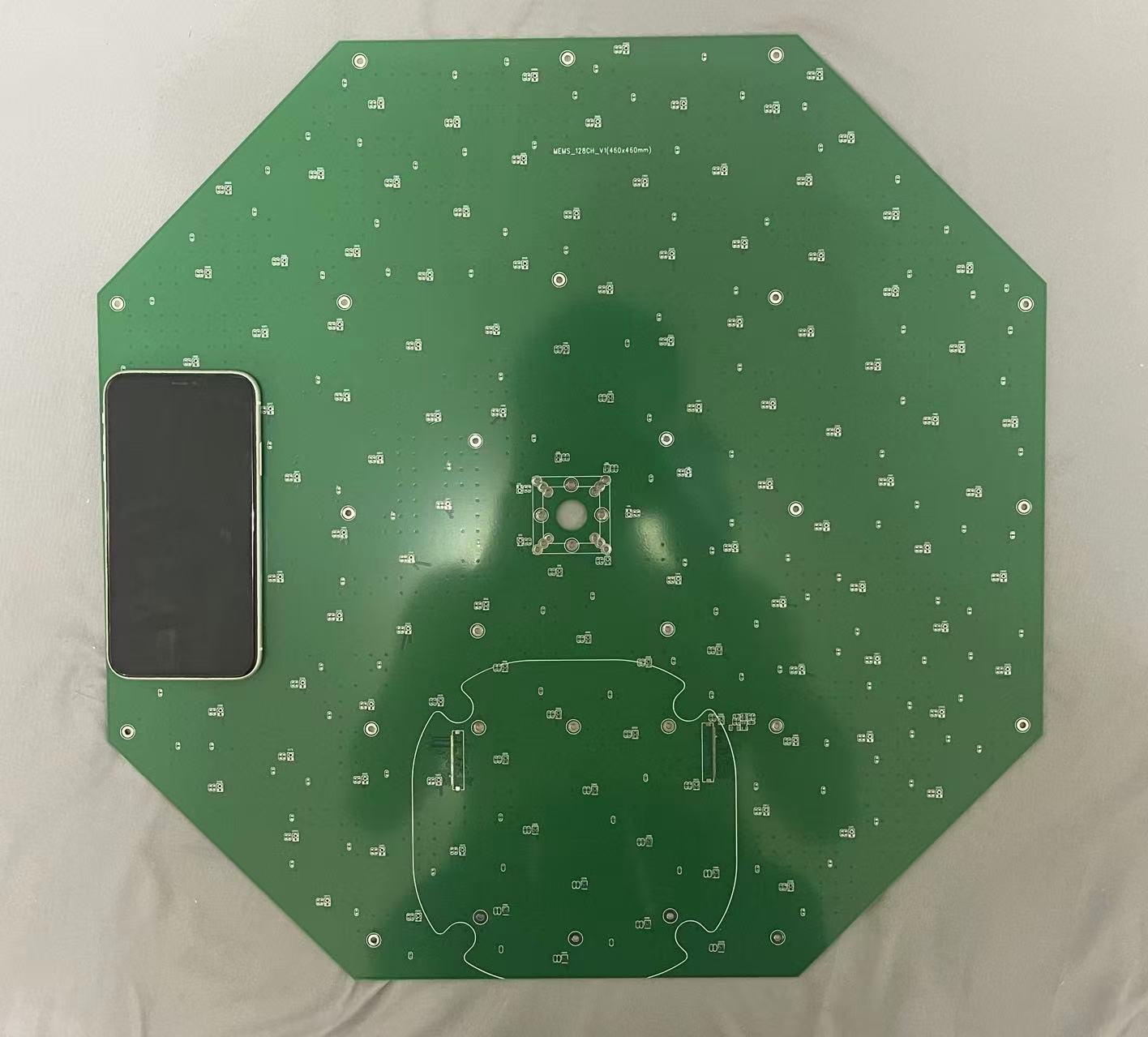
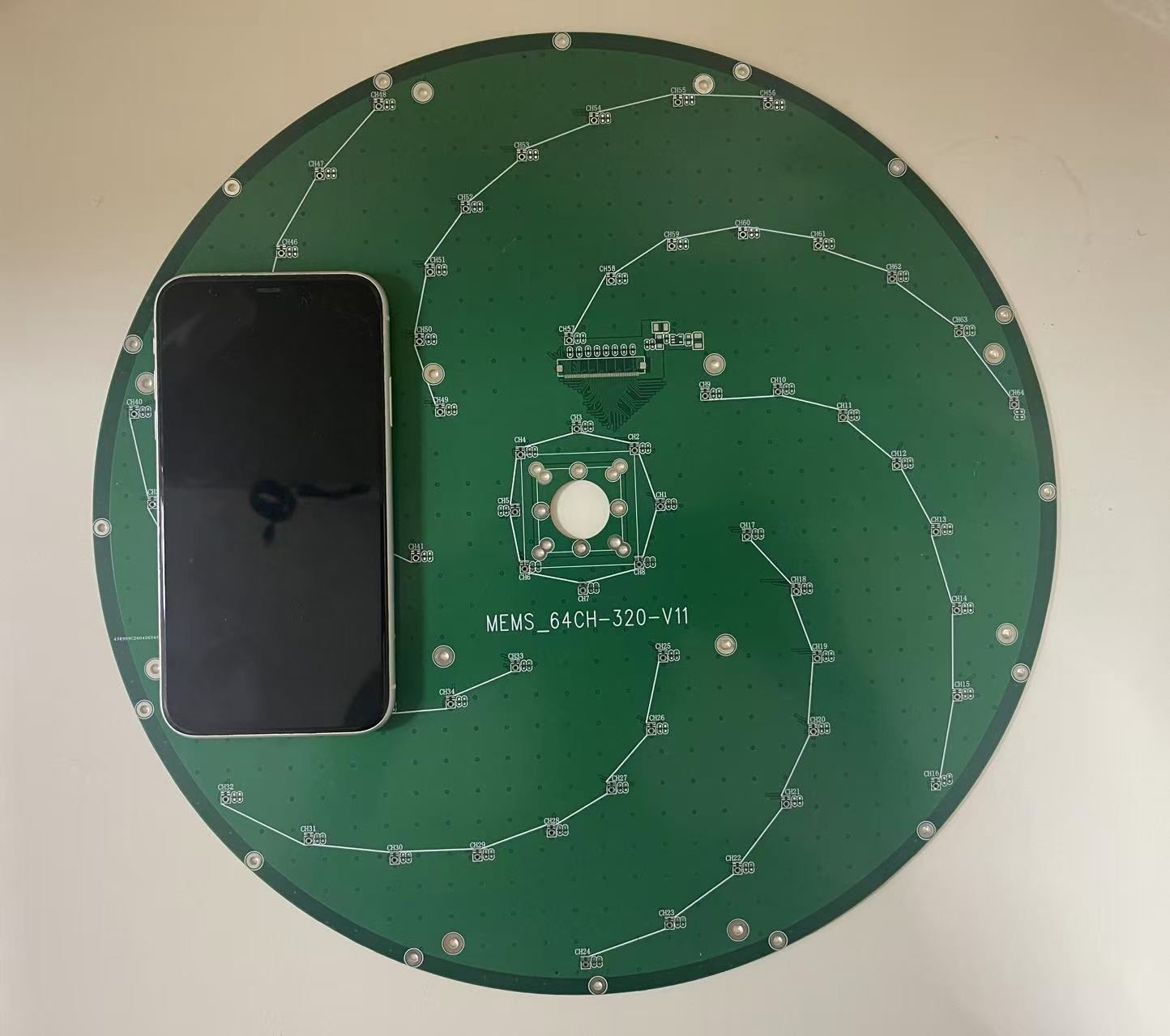
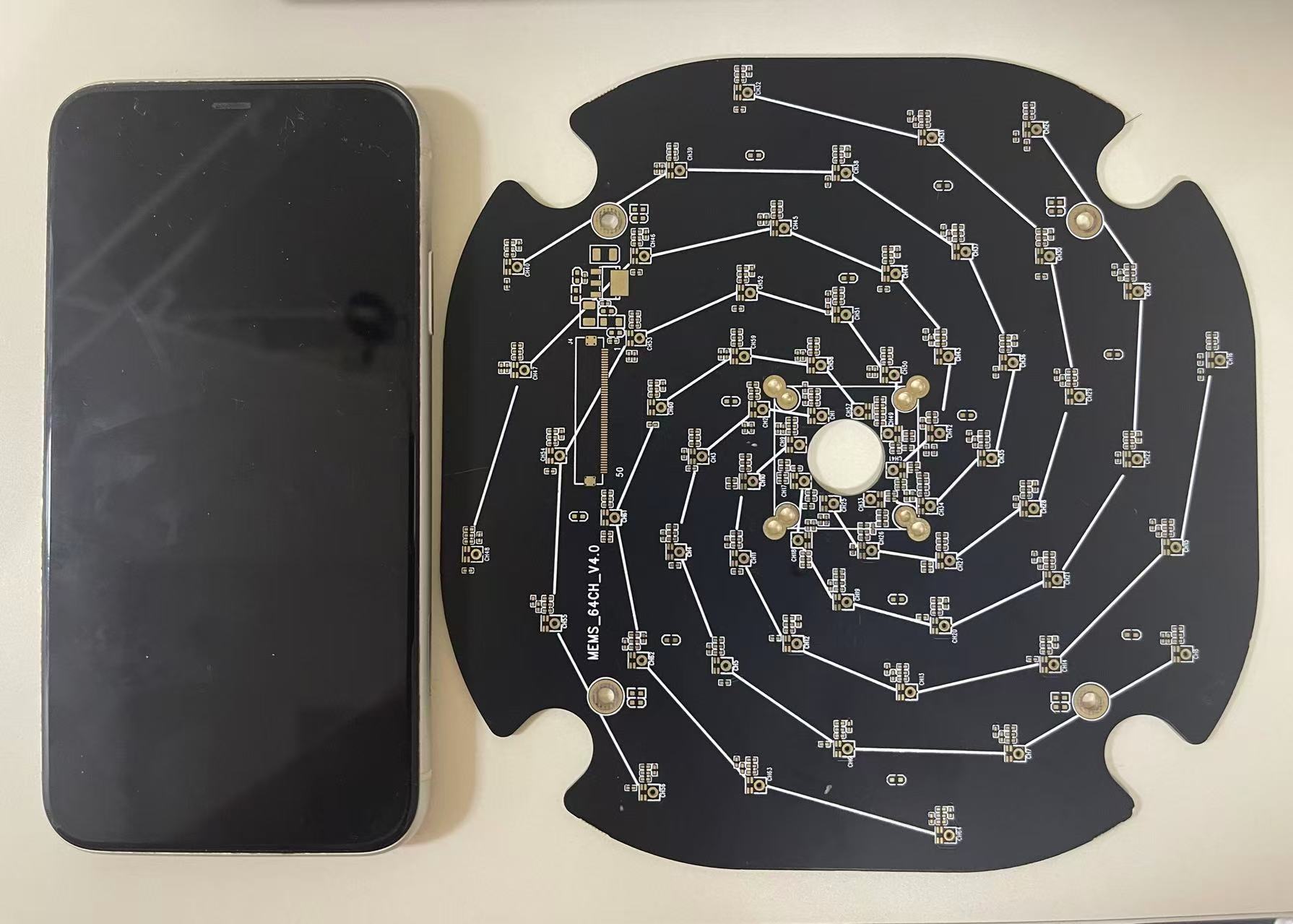
How we select an array for your application
We evaluate aperture, microphone spacing, array geometry, frequency response, calibration and signal-to-noise ratio together. A larger aperture can improve low-frequency spatial resolution; close spacing and suitable geometry help control high-frequency spatial ambiguity. Working distance, reflections and source strength also affect performance.
The 192 kHz figure describes sampling, while 96 kHz describes the upper acoustic frequency limit. These are distinct from acoustic image frame rate. The practical passband near 96 kHz depends on microphone response and anti-alias filtering.